

What They Refused to Throw Away
Twenty-five years after the fourth grade, two hours underground at the 9/11 Memorial Museum, and the people who fought to keep the steel.
I was in the fourth grade at Forest Hill Elementary, and then I was standing in my living room next to my mother while she cried.
That is most of the memory. What little middle there is comes back as confusion. The televisions being flipped on in the classroom. The principal's voice on the intercom, handling it so delicately, telling us we would be dismissed early. Then home, where the towers were on the television and my mom was crying in the middle of a Tuesday morning, which was not a thing that happened, and I remember understanding that something enormous was occurring and being entirely unable to walk into it. I floated somewhere above my own body and watched the two of us watch. Twenty-five years later I can still feel the carpet.
Every person over a certain age has a version of this. It is one of the few memories this country holds in common, held from a billion different rooms at once. And because we all have one, we start to believe we have the story. We don't. We have a fragment, a television set, a kitchen, a mother's face. I carried my fragment around for a quarter century thinking it was the thing.
Then I went down into the museum.
Going under
You have to say something about the location first, because nothing else about the place would work without it.
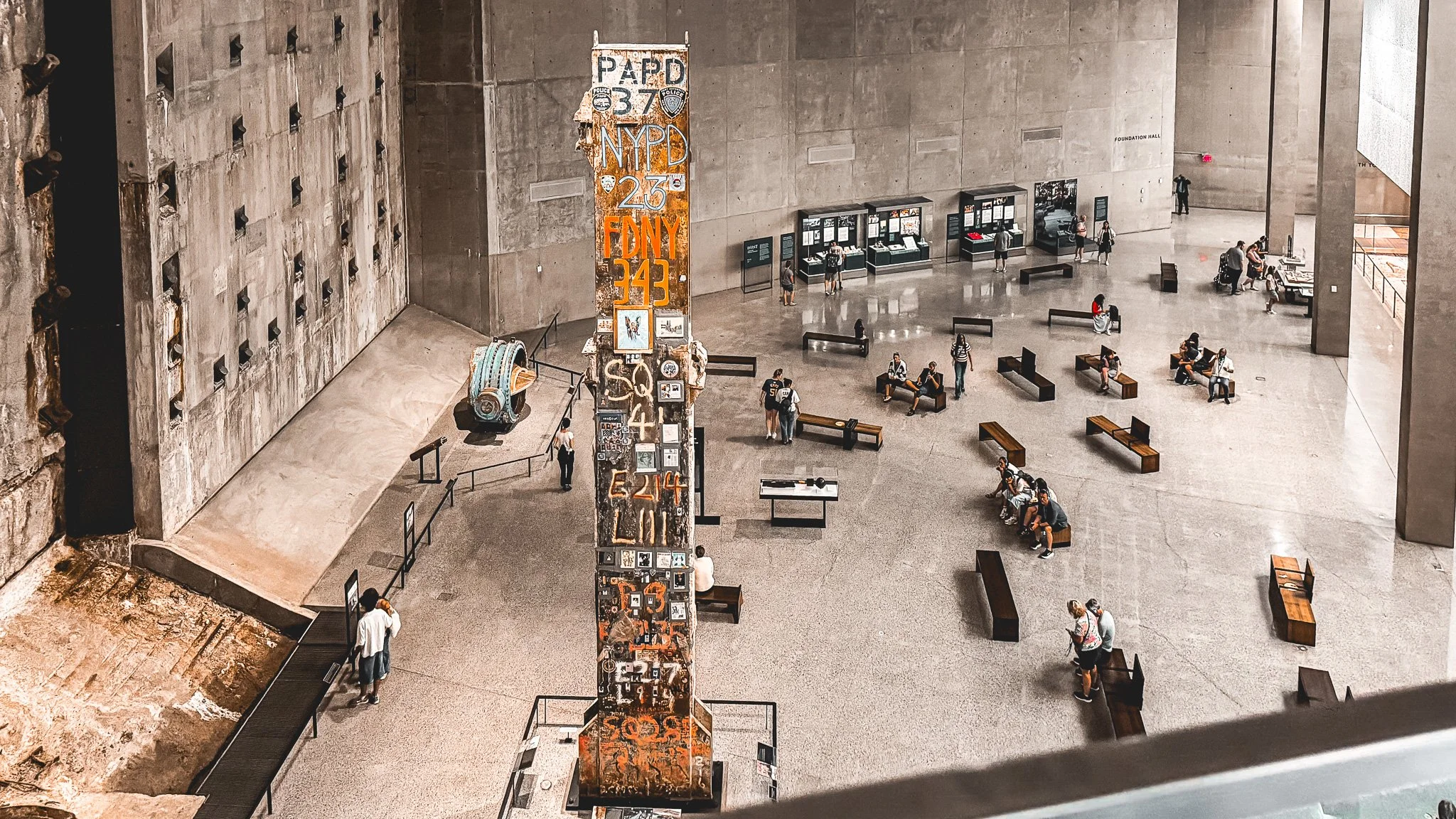
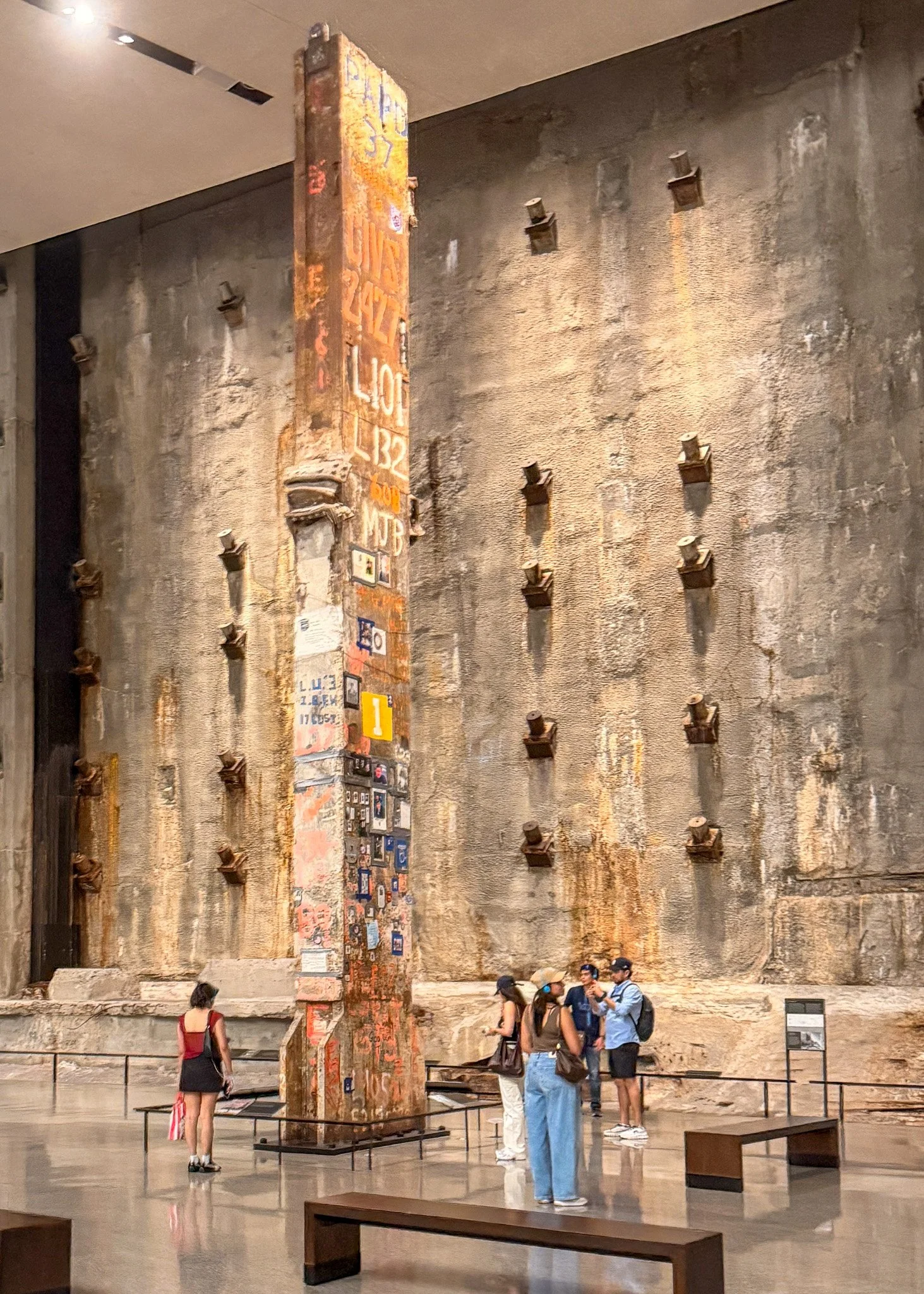
You are not visiting a monument to the place. You are in the place. You descend, and you keep descending, below street level and down to bedrock, until you are standing inside the footprints of buildings that are not there. The original slurry wall, the foundation of the World Trade Center still intact, dwarfing you with it’s magnitude. No architect could have manufactured that feeling. It was already in the ground. All they had to do was refuse to build over it, which is its own kind of design decision, and the hardest one.
There is a gravity down there, the same gravity that made ground zero mean what ground zero means. The museum does not add to it. It just gets out of the way and lets you stand in it.
What they refused to throw away
Here is the thing I didn’t know and one of the things I have thought about most since.
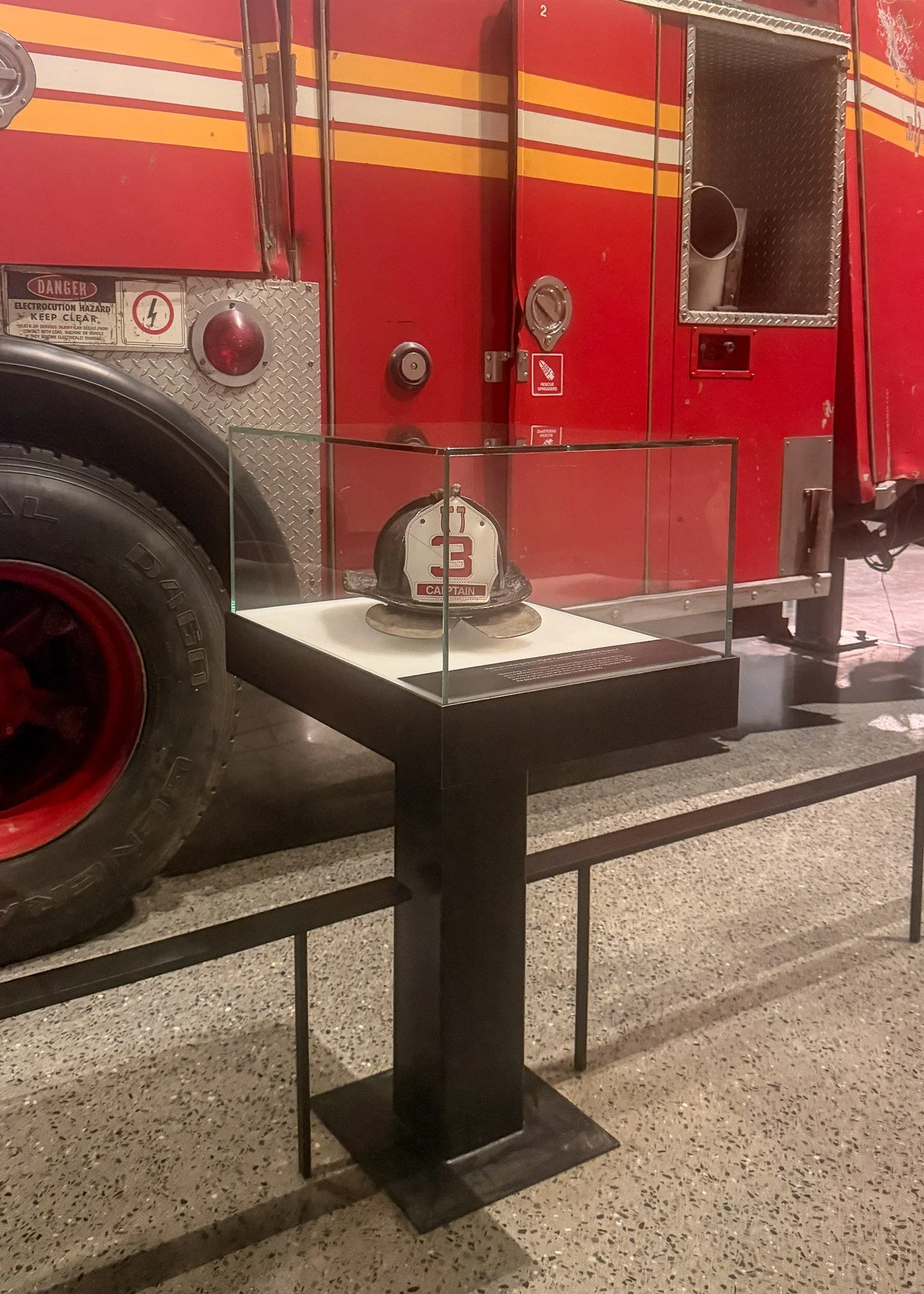
While the recovery was still going on and the pile of rubble was still being cleared, a small group of people was already deciding what not to lose. The Port Authority stood up an archive committee, led by the architect Bartholomew Voorsanger with the art consultant Saul Wenegrat, and because no single agency had total command of that site, they had just enough room to work. They went out into the wreckage and chose. Workers on the pile started flagging things for them, telling them “you have to come see this”. Over nearly three years they catalogued more than two thousand objects and something like seven thousand tons of steel.
Somebody, in the middle of the worst thing that had ever happened here, had the presence of mind to say: this is not debris. This is evidence and it is memory, and someday people are going to need to stand in front of it to have any chance of understanding that day.
That decision is the only reason the museum exists in the form it does.
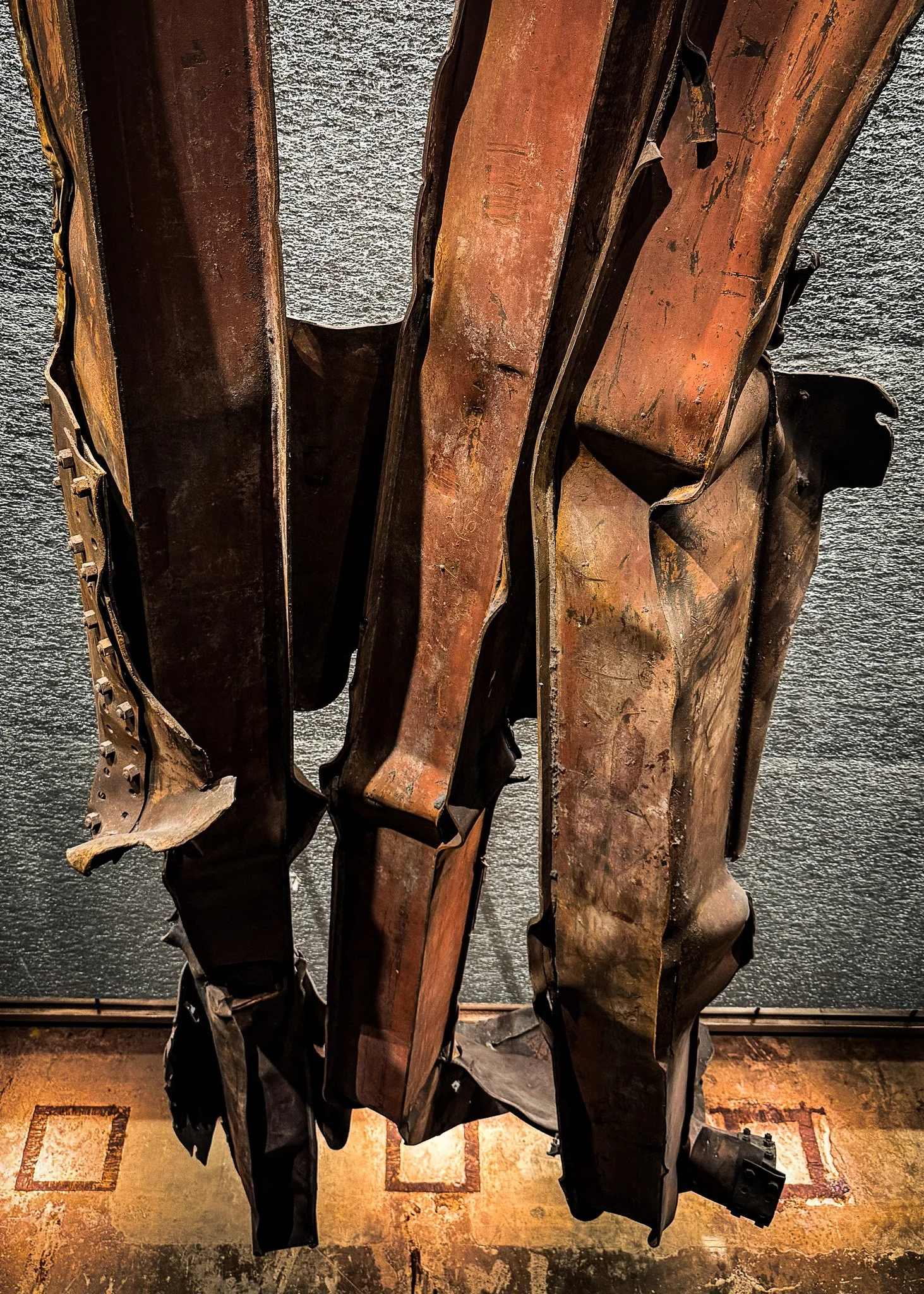
Because of it, you can stand in front of the warped steel once suspended in the New York skyline. The actual facade from the North Tower, from the floors where Flight 11 went in, bent the way it bent that morning. You can see the stairs people ran down, the last intact piece of the place where people escaped the site, still holding the shape of the descent. It is so surreal that your mind keeps trying to file it as a replica, and it will not file, because it isn't one.
We write a lot at this studio about objects and what they carry. About how everything anyone chooses to keep is a quiet argument for what matters. I have never seen that argument made at this scale, or at this cost, or under this much pressure. It was worth every ounce of what it took. It was a marvel of design, and even more so, of humanity.
Reconstructed from every angle
What they built out of what they saved is, and I mean this plainly, a masterpiece of construction.
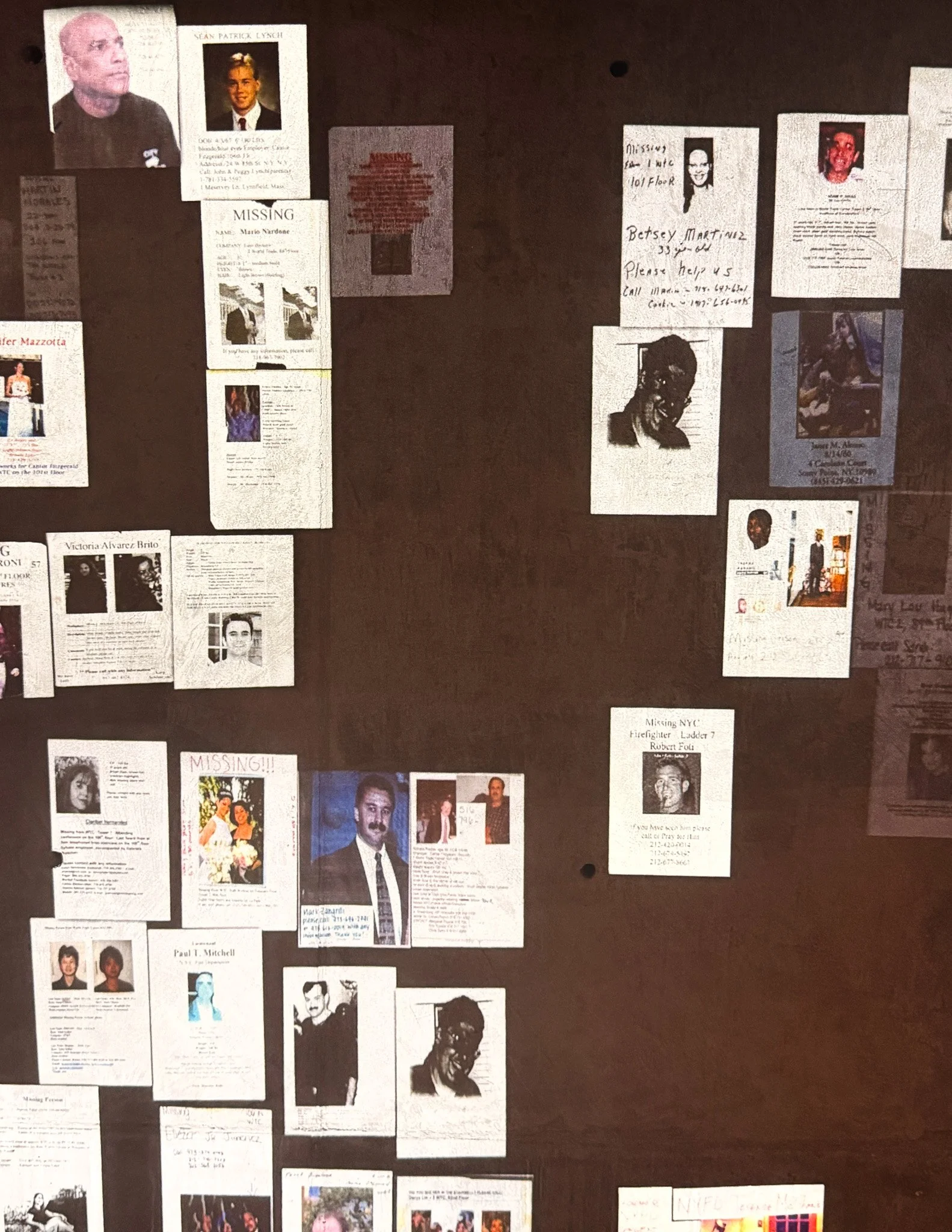
They rebuilt that morning from every angle they could find. From inside the towers and from the street. From the cockpit and from the newsroom. From the firehouse and from somebody's kitchen in another state. Calls and recordings and photographs and objects and the minute-by-minute of it, laid alongside each other until the fragments start touching and you realize you are no longer watching the day. You are standing inside it, in a way you were never able to as a child, because as a child you could only hold one angle and your one angle was most likely a television in a living room.
It is storytelling built like structure: thoughtfully architected, load-bearing, every piece doing work. It is assembled with such extraordinary care. It never sensationalizes and it never flinches, which are both easy and are almost never done together.
The hands
What I kept feeling, over and over, in room after room, were hands.
The whole place is built like a pair of outstretched hands trying to hold everyone that day touched and to regard everything that was sacrificed. Not just the people who died, though they are held with a tenderness I was not prepared for. Everyone. The people who ran up the stairs and the people who ran down them. The people who waited by a phone. The people who spent the following months on the pile. The people who watched from a living room in another state and floated up out of their bodies and never quite came all the way back down.
I write this still in awe of the sacrifice, knowing I forever will be..
The ones who stayed with somebody who could not get out on their own. The ones who came back the next morning, and the morning after that, and then for months, and breathed that air while they worked because what was in front of them mattered more than what it was doing to their lungs. Many of them have been paying for it ever since.
That is what I keep coming back to. Not just the scale of what was taken that day. The scale of what people gave, in the middle of it, with no time to weigh it.
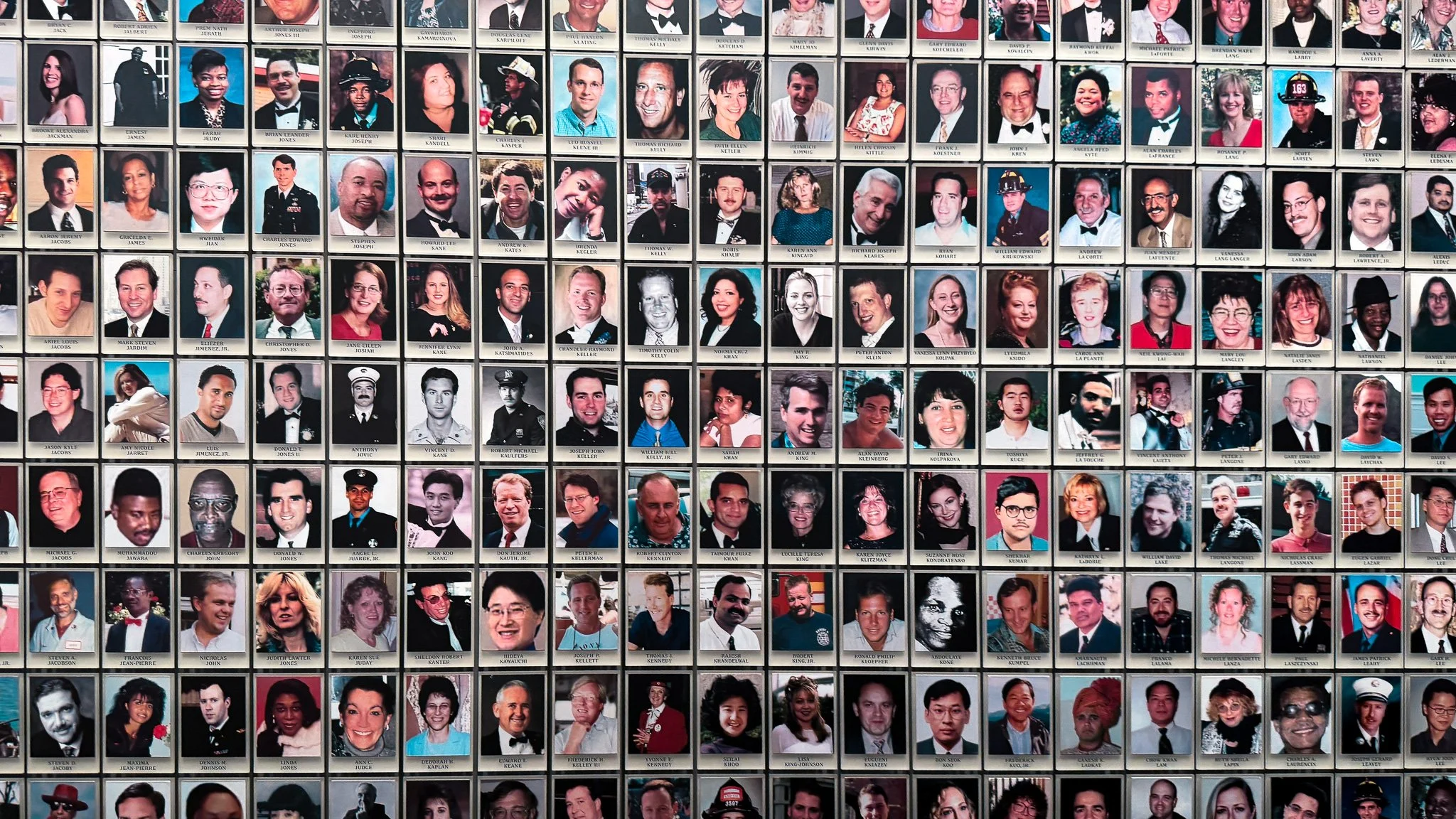
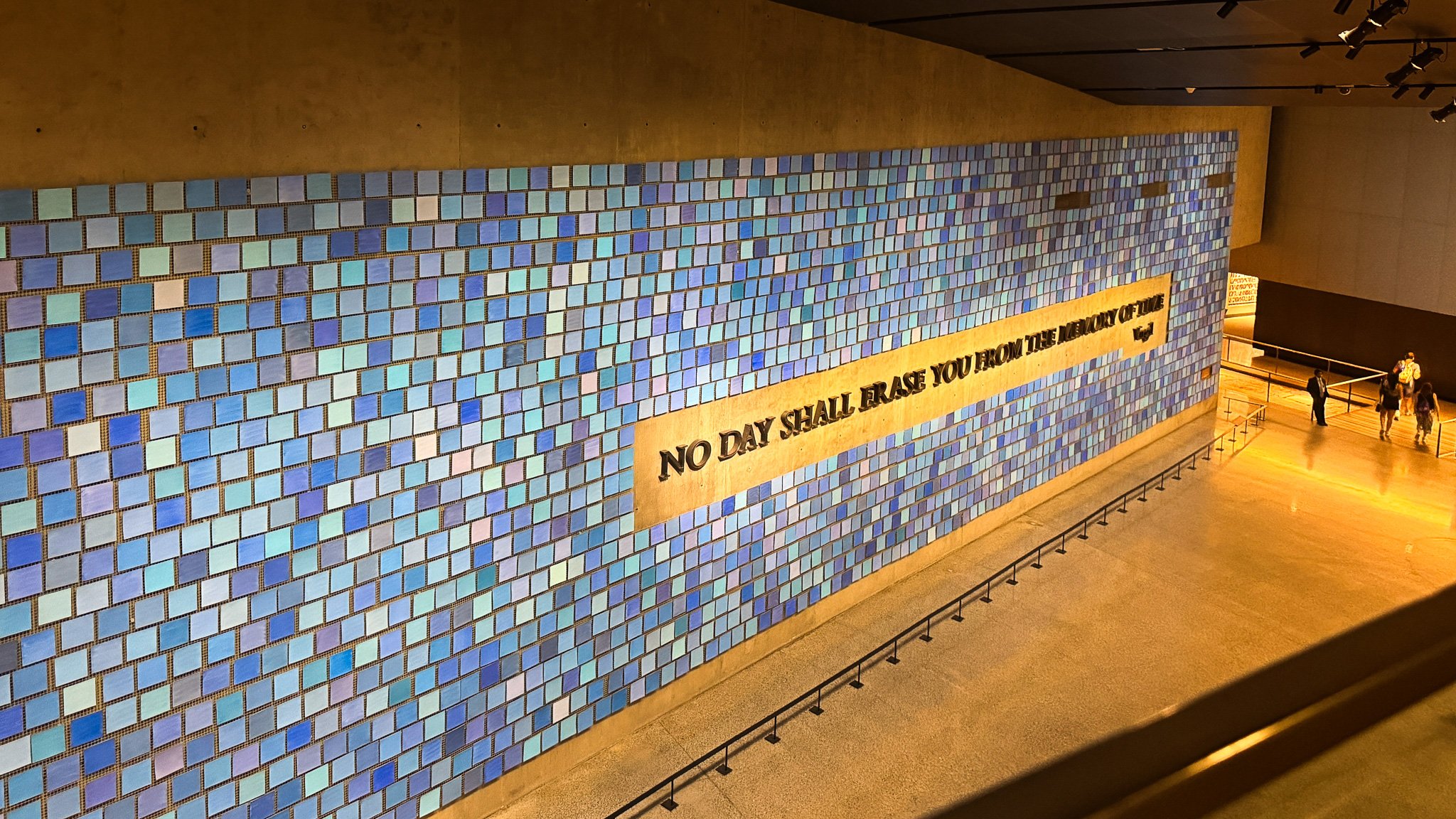
It refuses to let the dead be a number. It gives you names and voices and faces and the small, ordinary, specific things about a person, so that you leave having actually met some of them. You get to know them. That is the hardest thing a memorial can do and they do it over and over.
I have never cried that much in public. I have also never been less ashamed of being caught in a museum's gravity. It deserved every ounce of me.
Two hours, and not nearly enough
We went near closing, which I do not recommend, and we had to move through the last of it faster than it deserved. Two hours evaporated and felt like forty minutes. We came up onto the plaza into the evening completely wrung out and I was already plotting when I could come back.
I have been home a while now and it is still with me almost daily. I’ve attempted at processing it through a number of songs, poems, and journal entries that only seem to scratch at the surface. What I carried out of there was not grief exactly, though there was plenty of that. It was reverence. And love, honestly, love for a city that took the worst day anyone can imagine and then spent twenty-five years building the most careful, most generous, most humane possible answer to it. That is such a New York thing to do. To be hit that hard and respond with craftsmanship.
I went in thinking I knew this story. I was alive for it. I was in New York for school while the new tower went up, eventually living close enough that the site became part of my every day. I took in the grounds constantly, hovering over it. I have watched a good amount of the films and documentaries made about it.
None of that was the same as standing in it. I would not say I understand that day now, and I am not sure understanding is what is on offer down there. What I know is that I had been holding one frame of it since the fourth grade, and that place is built out of thousands.
If you go to New York for nothing else, go for this. It justifies the trip on its own. Give it a full day. Give it more than we did.
And to everyone that morning took, and everyone it left behind: twenty-five years on, in a city that refused to throw any of you away. We remember. And we always will.