

A Designer’s Guide to Palm Springs: Checking Into the Parker
Dry desert heat, midcentury soul, and the most stylish 13 acres in the Coachella Valley.
We traded Austin's thick, swampy June for the dry, mineral heat of the Coachella Valley and checked into the Parker Palm Springs - a place we'd been circling for years. As designers, we don't really take vacations; we take field trips. And few places reward that kind of looking like Palm Springs, a town that treats midcentury modernism not as nostalgia but as a way of life.
What follows isn't an itinerary so much as a few things that stayed with us - starting with the hotel we never quite wanted to leave - plus the design-minded detours worth building a trip around.
Where We Stayed: The Parker Palm Springs
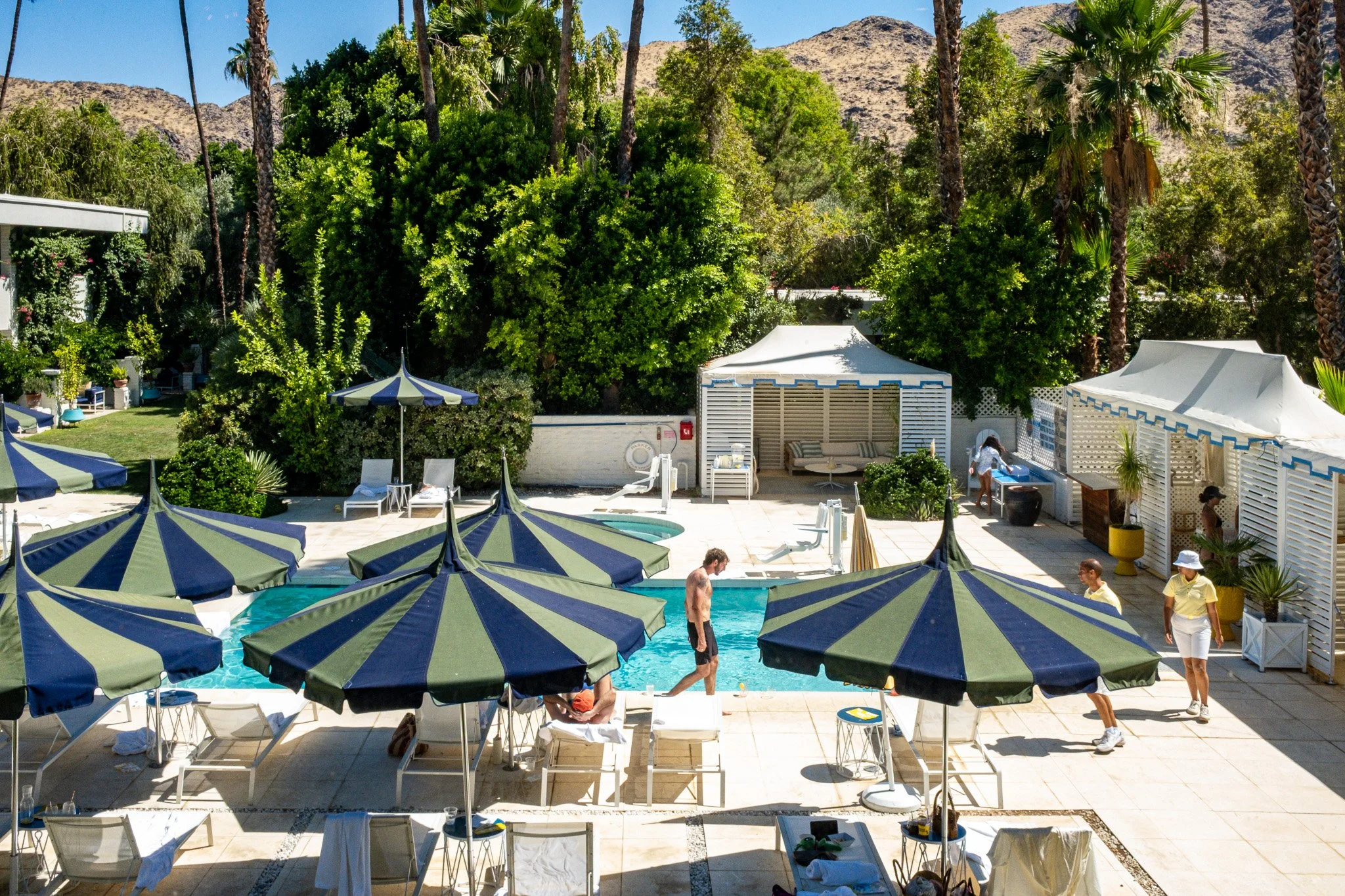
You feel the Parker before you see it. The drive curls past tall, manicured hedges that hide the property like a secret, and then the doors open onto a world that is unmistakably, gloriously Jonathan Adler. Bold color, graphic pattern, needlepoint pillows with a wink, a seven-foot bronze banana standing in the garden like it owns the place. It's maximalism with a sense of humor - the rare hotel that feels like a personality rather than a brand.
A little history
The Parker has lived several lives. It opened in 1959 as California's first Holiday Inn, then was bought a couple of years later by the singing cowboy Gene Autry, who turned it into his "Melody Ranch" and used it as a spring-training base for his California Angels. In the late 1990s, entertainment mogul Merv Griffin reinvented it again as a French-themed resort with a Givenchy spa. Then in 2003, hotelier Jack Parker took over and handed the keys to a young Jonathan Adler, whose $27-million reimagining gave the property the irreverent, jewel-box identity it still wears today. Two Adler refreshes later, it has never lost its midcentury soul - it just keeps getting more itself.
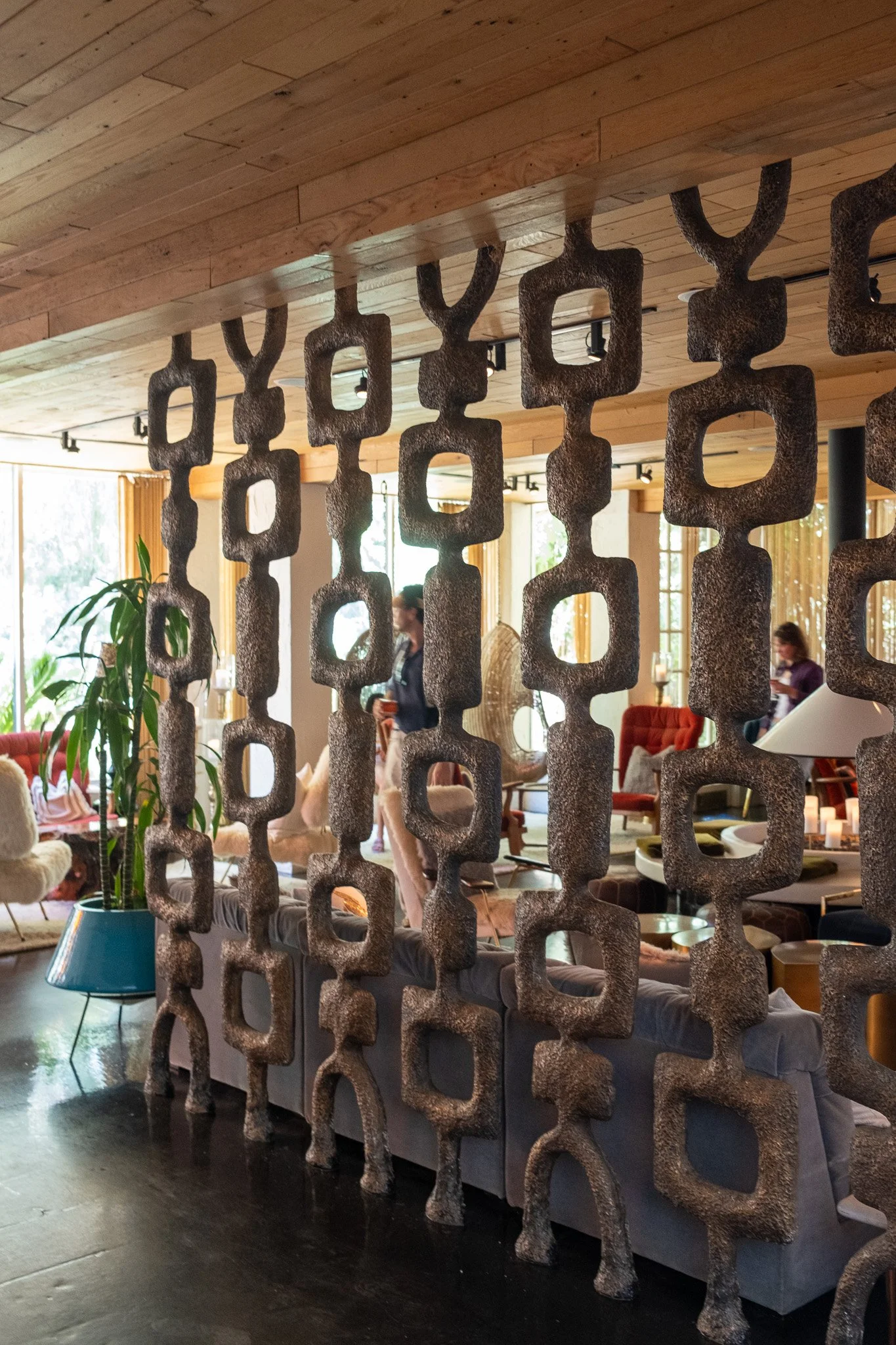
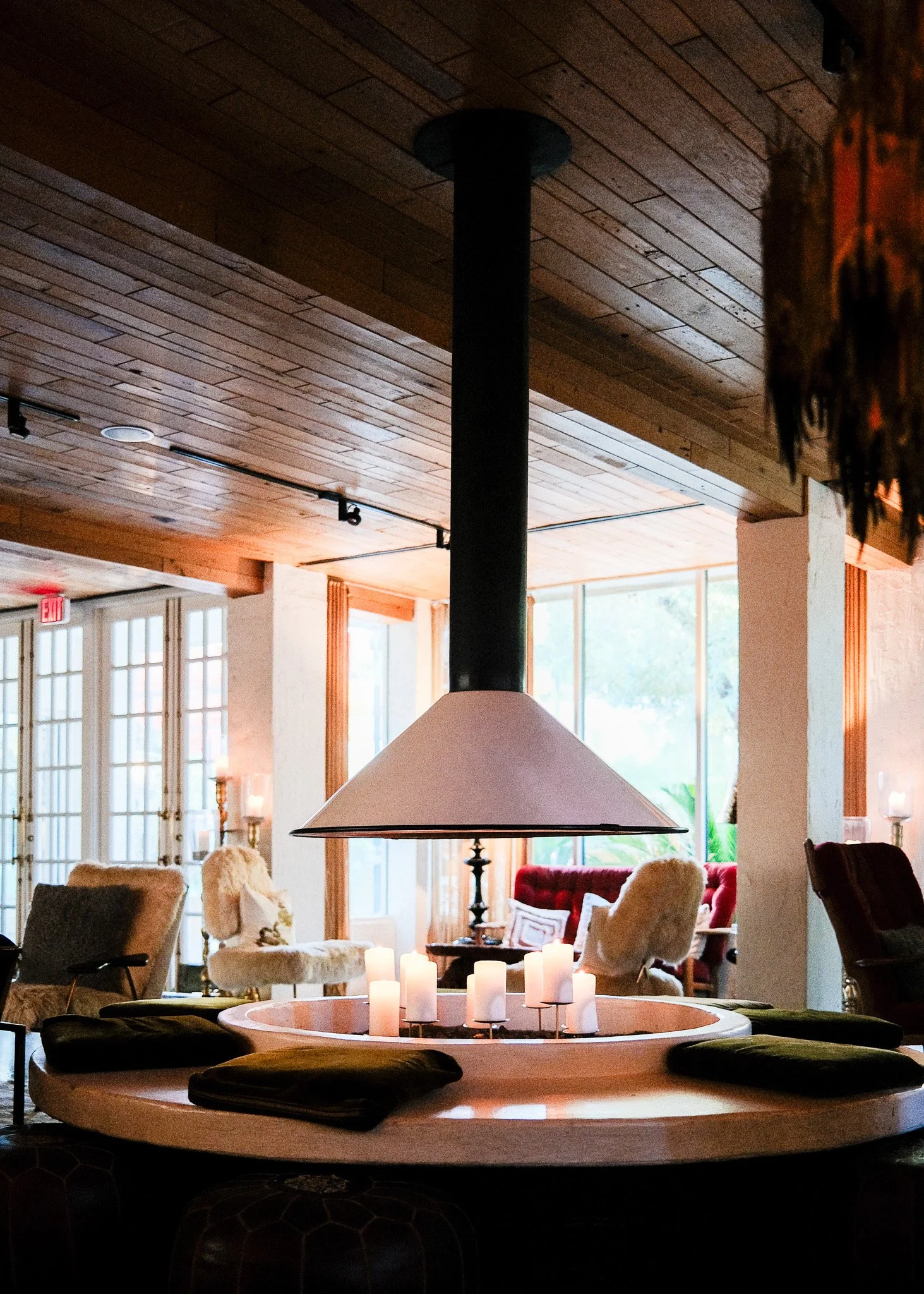
That layered history is part of why the place feels so alive. It's a hotel that has been a roadside inn, a cowboy's hideaway, and a fashion fantasy, and somehow all of those ghosts still hum underneath the wallpaper.
The grounds are the main event
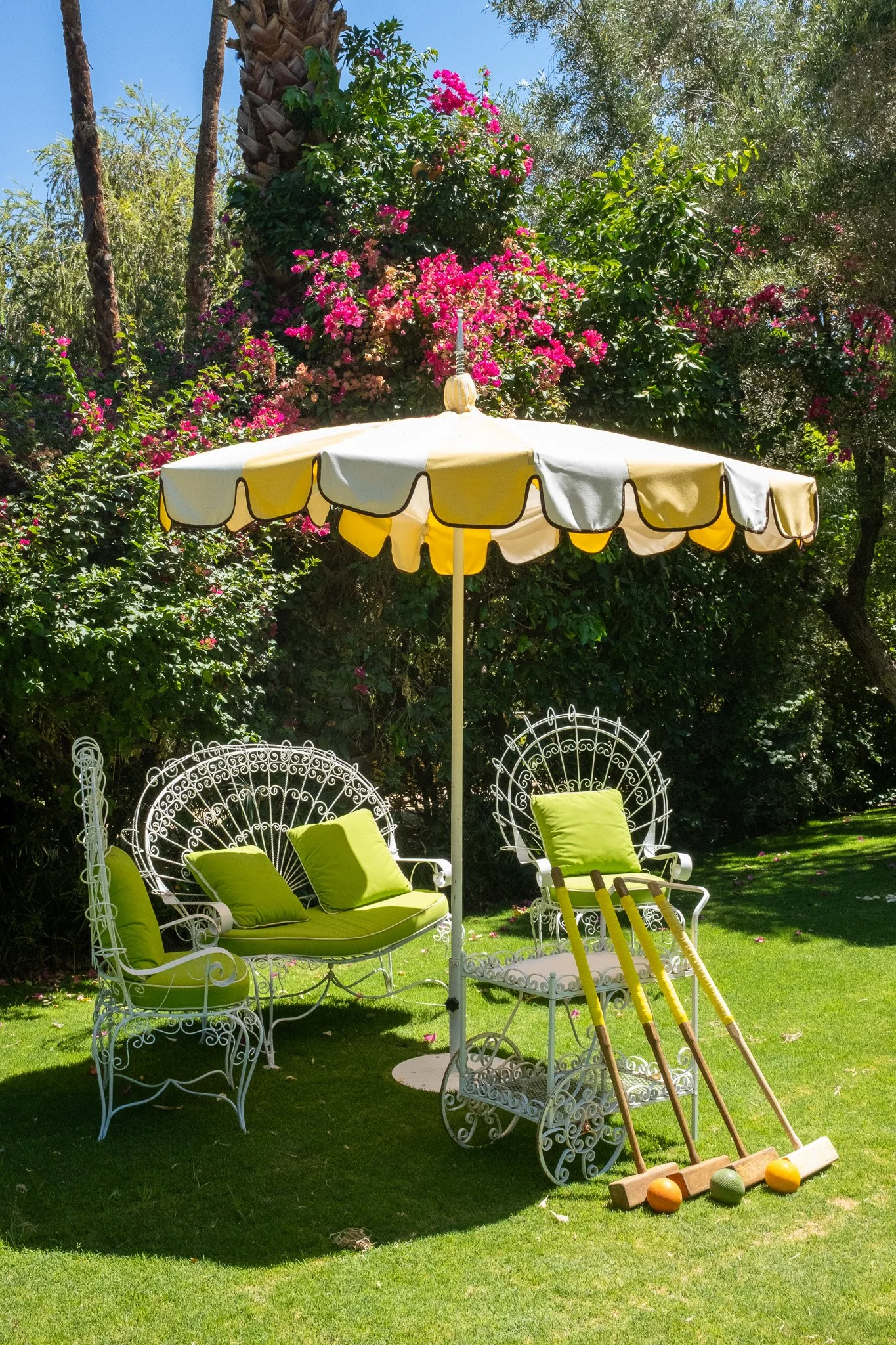
The Parker's thirteen acres are designed to be wandered. Winding paths thread through citrus groves and lush, almost jungly planting, opening onto fire pits, croquet and petanque lawns, red clay tennis courts, a giant chess set, and hammocks tucked away for anyone willing to look. We spent a full afternoon just drifting - drink in hand, no agenda - which is exactly what the landscape design wants from you.
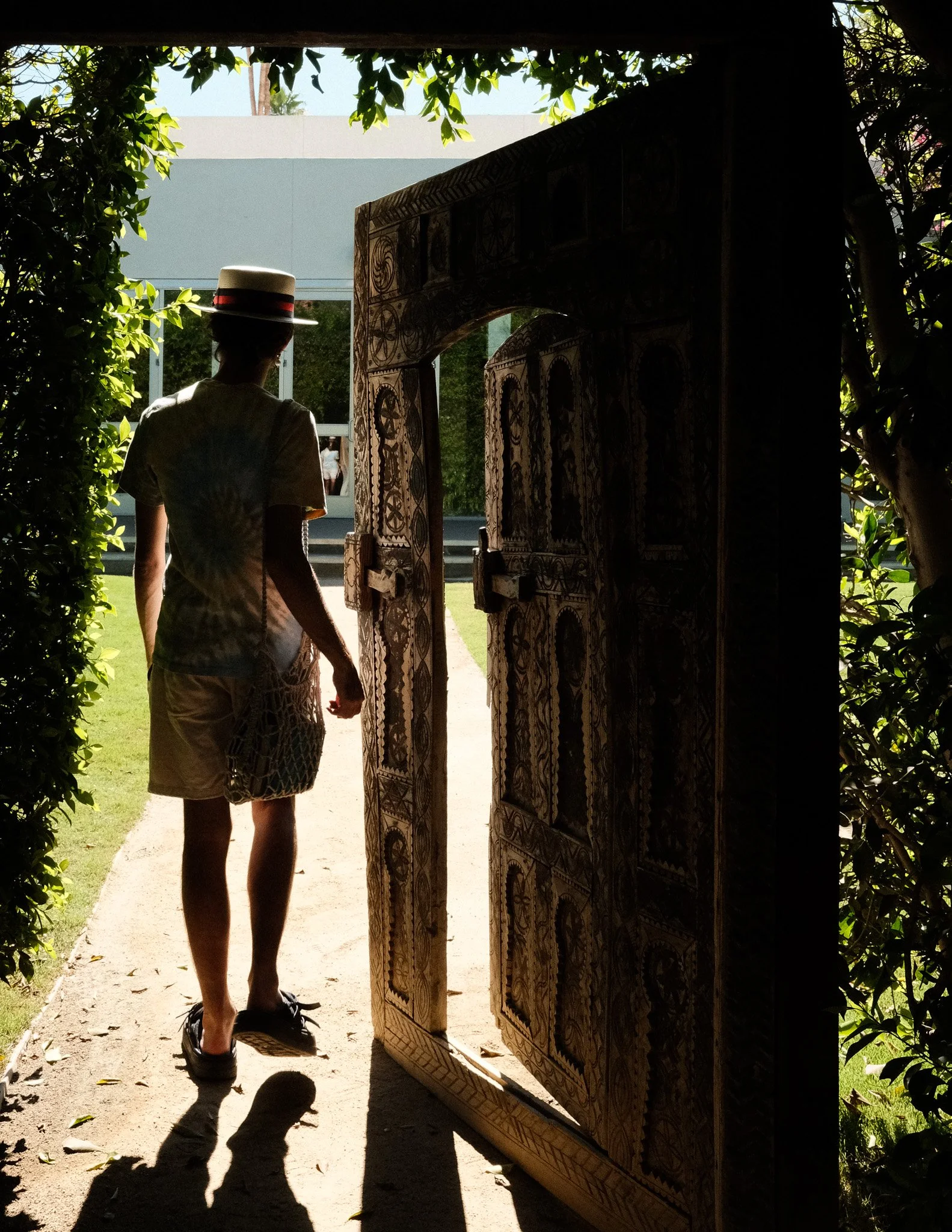
When the heat peaked we retreated to the Palm Springs Yacht Club, the Parker's gleefully nautical, 18,000-square-foot spa - all navy stripes and Adler whimsy, with eucalyptus steam rooms and an indoor saline pool. Meals were their own pleasure: Norma's for a long, bright, citrus-soaked breakfast, and Mister Parker's for dinner - dark, velvety, and decadent in the best supper-club way. In between there's the Lemonade Stand, a shaded little perch for an afternoon cocktail.
A Note on the Heat: Austin vs. the Desert
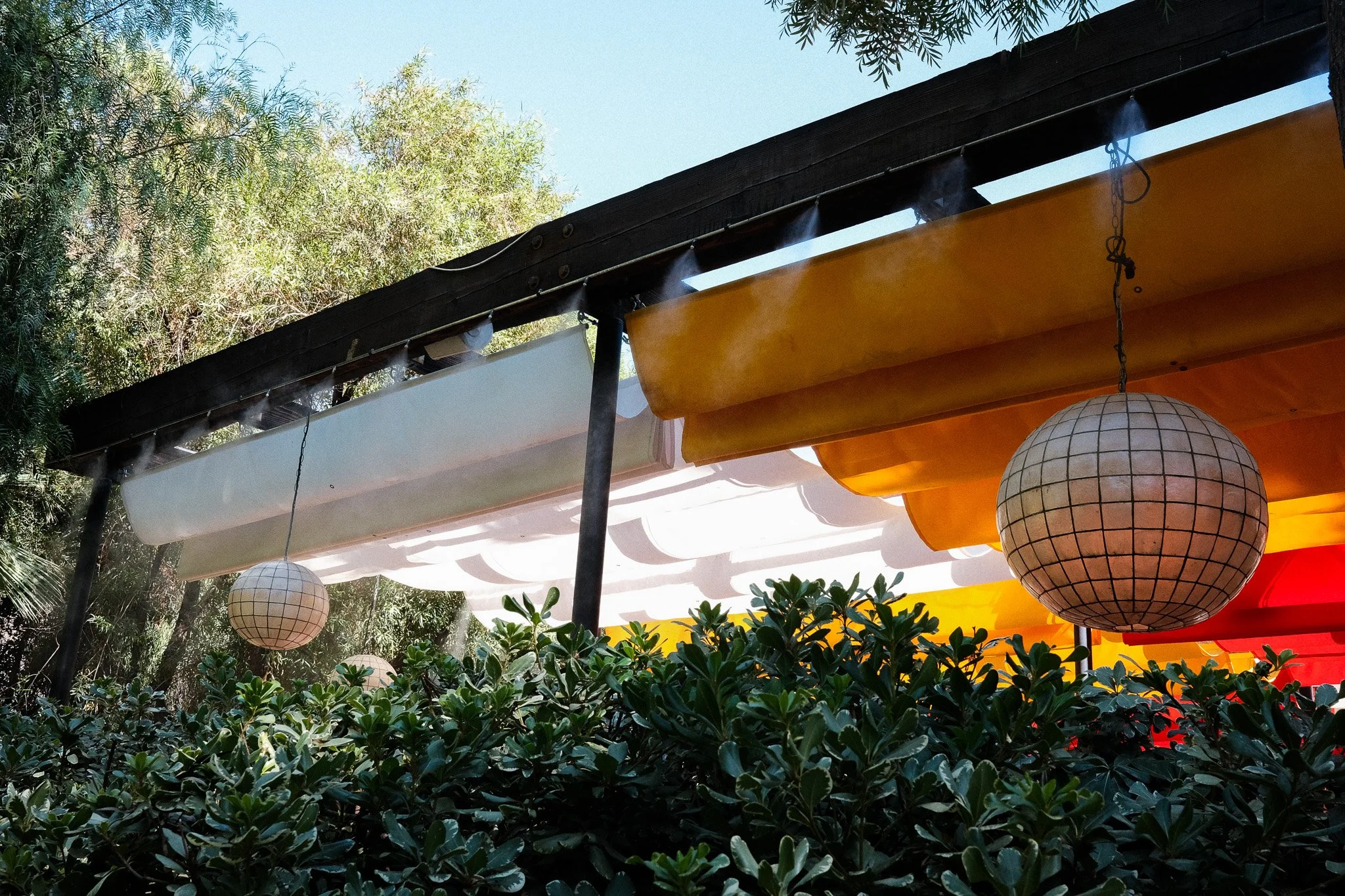
Here's the thing we kept marveling at: 105 degrees in Palm Springs does not feel like 105 in Austin. Austin's heat is a wet wool blanket - humid, heavy, the kind that has you damp before you reach the end of the block. The desert's heat is bone-dry and strangely clarifying. It sits on your skin instead of soaking into it. You can sit in the shade with a cold drink and an actual breeze and feel genuinely comfortable, then step into the pool and dry off in what feels like ninety seconds.
It changes how you move through a place. The light is sharper, the shadows are crisper, and everything - the mountains, the modernist rooflines, a single palm against a flat blue sky - looks like it was art-directed. It's no accident that this is where Slim Aarons made his name. The desert flatters good design.
Get Lost (On Foot)
Palm Springs is small, walkable, and absurdly photogenic, so we did what we always do: wandered without a plan. Downtown's Palm Canyon Drive is the obvious spine, but the real reward is the residential streets, where you stroll past butterfly rooflines, breeze-block screens, and front yards landscaped entirely in cactus and gravel. Half the joy is just reading the architecture as you go - it's a town-wide open-air museum of desert modernism.
A Design-Lover's Detour: What to See
If you came for the architecture - and as a designer, you did - these are the pilgrimage sites:
The Kaufmann Desert House (1946). Richard Neutra's masterpiece, the most famous Desert Modern home ever built, with floating planes of glass set against the San Jacinto Mountains. It's private, but you can admire it from the street - it's the very house in Slim Aarons' "Poolside Gossip."
Frey House II (1964). Albert Frey's tiny, perfect house built into the mountainside, with a boulder running straight through the living room. It's owned by the Palm Springs Art Museum, which offers occasional interior tours worth planning around.
Sunnylands. The Annenberg estate in nearby Rancho Mirage, designed by A. Quincy Jones with interiors by William Haines. The midcentury "Camp David of the West," surrounded by a stunning desert garden you can visit even without a house tour.
Palm Springs Art Museum & its Architecture and Design Center. The A+D Center is housed in a restored E. Stewart Williams bank building and is the single best primer on the region's design legacy. (Fun fact: Trina Turk helped fund the purchase of the building.)
Where to Shop (For Design People)
Trina Turk. Her flagship occupies a glass-walled 1960s building by Albert Frey himself, so you're shopping inside a piece of architectural history. Indoor-outdoor, light-flooded, and very much the platonic ideal of a Palm Springs boutique.
Shag: The Store. The gallery and shop of artist Josh Agle, whose candy-colored paintings of midcentury cocktail parties basically are the Palm Springs fantasy. Great for prints, books, and covetable little gifts.
The Uptown Design District. The most rewarding stretch for browsing: a dense run of vintage and modern shops. Hunt for midcentury furniture and objects at spots like Flow Modern, Gypsyland, and Modern Way, then drift between galleries at your own pace.
A Few More Stops We'd Recommend
Moorten Botanical Garden. A delightfully eccentric, family-run "Cactarium" full of desert specimens. Small, strange, and beautiful.
Palm Springs Aerial Tramway. Ride the rotating tramcar from the desert floor to 8,500 feet. In ten minutes you go from cactus to pine forest, and the engineering is its own midcentury marvel.
Modernism Week. If you can time it (February, with a smaller fall preview), the whole town becomes a design festival of home tours, talks, and parties - the best way to get inside the houses you can usually only admire from the curb.
Palm Springs Rewards the Designer's Eye
What we love about Palm Springs is the same thing we love about a great object: nothing is accidental. The town was built on the belief that beauty and ease belong in everyday life - that a carport can be sculpture, that a hotel can have a sense of humor, that the desert is a backdrop worth designing for. We came home sun-soaked, a little spoiled by the dry heat, and full of the particular kind of inspiration that only comes from a place that takes design seriously while never taking itself too seriously.
Go for the architecture. Stay at the Parker. Walk until the light goes gold, then find a pool.
Plan Your Visit
Stay: The Parker Palm Springs
Do: Palm Springs Aerial Tramway, Sunnylands, Frey House II tours, Palm Springs Art Museum + A+D Center, Moorten Botanical Garden, Modernism Week
Shop: Trina Turk, Shag: The Store, Flow Modern, Modern Way