

The Slow Return: Why the Handmade Is Design’s New Luxury
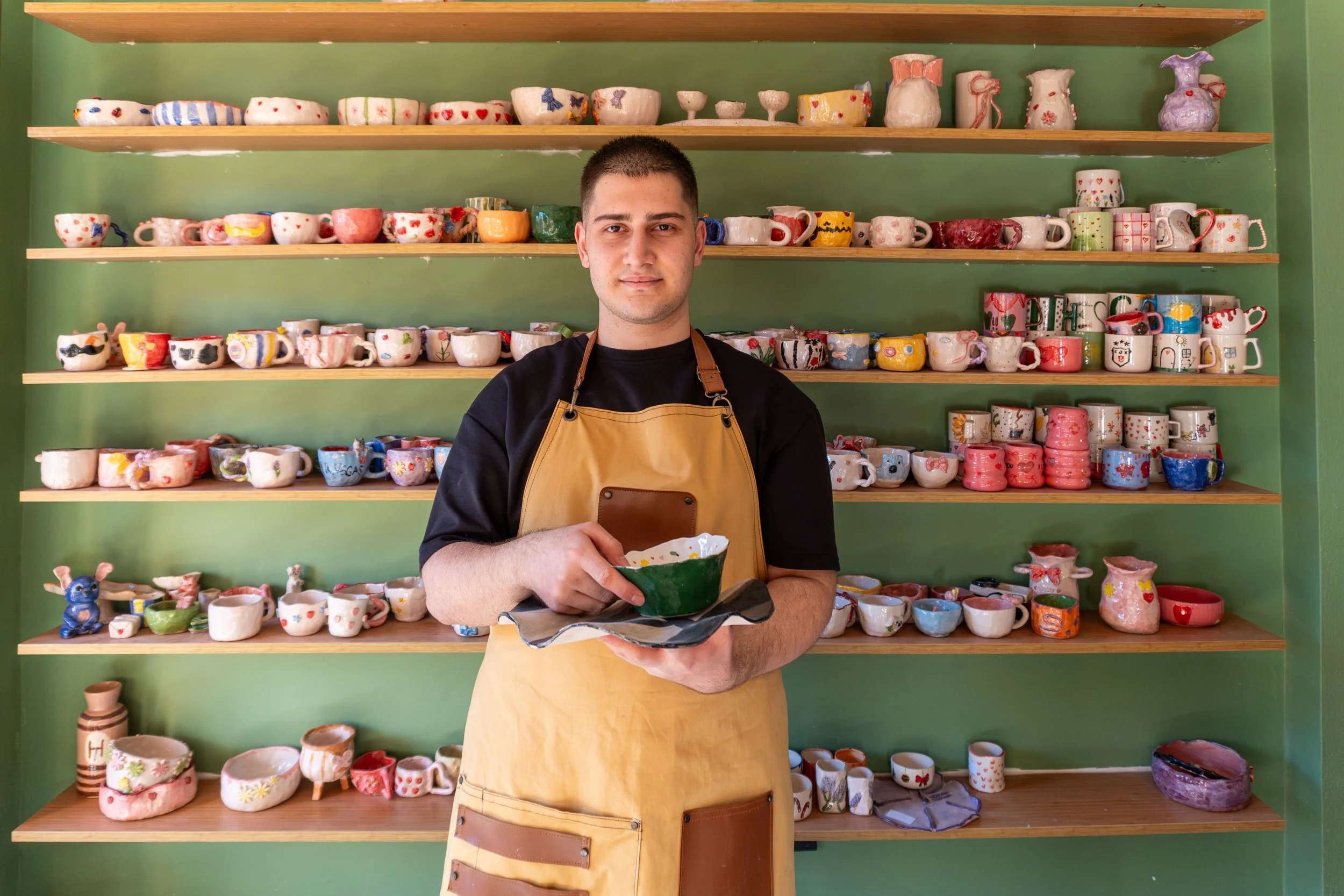
There's a quiet mutiny happening in the design world — and it smells like wet clay, sounds like a loom in motion, and looks nothing like a screen.
After nearly a decade of pixel-perfect minimalism, of interfaces so clean they could pass for operating rooms, something has shifted. Designers are picking up chisels again. They're scanning their sketchbooks instead of opening Figma. They're choosing the wobble of a hand-thrown edge over the precision of a CNC router — not out of nostalgia, but out of necessity. The handmade is no longer a niche. It's a statement. And in 2026, it might be the most radical thing a designer can do.
We've been watching this current build for a while now. This year, it crested into something undeniable.
The Evidence Is Everywhere
At Maison & Objet in January, the theme said it plainly: Past Reveals Future. The Paris fair — long a bellwether for where interiors and object design are headed — devoted its entire curatorial framework to the tension between enduring craftsmanship and contemporary innovation. Curatio, the collectible design village curated by Thomas Haarmann, showcased sixty signed pieces that insisted on slowed engagement, on the kind of looking that requires you to sit with an object before you understand it. Harry Nuriev, named Designer of the Year 2026, builds his practice not on creating from nothing but on transforming what already exists — amplifying the memory embedded in materials, giving discarded forms new resonance. He called his installation Transformism.

Meanwhile, Wallpaper* dedicated its January issue to the next generation. Its Future Icons 2026 feature profiled twelve emerging designers united, in the magazine's framing, by a mission to find new ways to speak the language of industrial design — using the materials and techniques of industry in unfamiliar ways. What's striking is how many of them get there by hand. Grace Atkinson, working out of Paris, weaves rugs, blankets and wall hangings in vivid wool, silk and mohair, made in collaboration with Ukrainian artisans using the Hutsul technique — a method her studio traces to the fourteenth century. Yoonjeong Lee, a Korean designer, takes humble utilitarian objects — nails, pencil stubs, the residue of labor — and casts them in aluminium, brass and pewter until they ask to be looked at harder. In Paris, Zbeul Studio — Thomas Noui and Victor Robin — blurs the line between archaeology and furniture design, most literally in the Archeologia chair, built from animal bone.
The message is consistent: the next wave isn't coming from the render farm. It's coming from the workbench.
The Anti-Minimalism Moment
It's Nice That saw the same weather coming. Its Forward Thinking series, published in January, ran a feature titled "I'm not a robot: why showing your workings has never been more important" — an argument that in an AI-saturated visual culture, evidence of process has become the thing that signals a human was involved at all. Elsewhere in the same series, "pick and mix" typography — collaged lettersets, patchwork, ransom-note construction — was named among the year's defining graphic moves. Both point the same direction: away from the seamless, toward the assembled.
The anti-minimalist contingent isn't simply choosing maximalism for its own sake. They're rejecting the idea that design should be frictionless, invisible, optimized into oblivion. There's a growing recognition that when everything is seamless, nothing is memorable. The rough edge, the visible seam, the glaze that pooled unpredictably in the kiln — these aren't flaws. They're signatures. They're proof that a human was here.
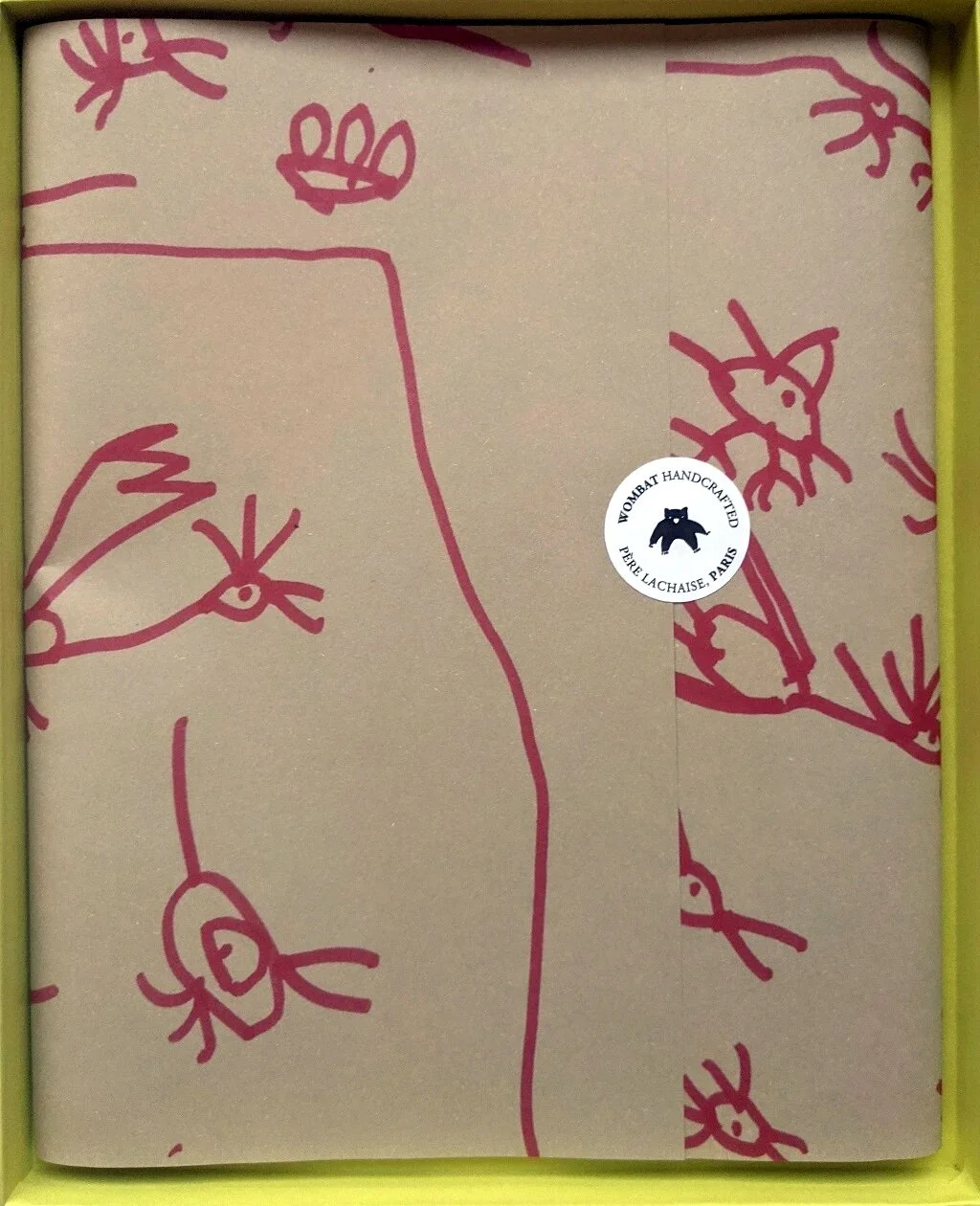
The market has noticed. In its 2026 Creativity Trend Report, Michaels found searches for visible mending up 144% year over year, DIY home décor searches up 79%, and searches for analog hobbies up 136% over the prior six months. And the generation supposedly native to screens is leading it: in a Talker Research survey of 2,000 US adults, 63% of Gen Z said they intentionally disconnect from their devices — the highest rate of any generation. The people raised on infinite scroll are choosing finite, tactile, slow.
Austin Knows This Already
Here in Austin, the analog revival isn't a trend report — it's Tuesday. During SXSW in March, a panel titled The Analog Revival: Handmade in the Age of AI filled a room at the Hilton downtown to discuss how creators are using nostalgia, scarcity, and authenticity to build loyal communities and cut through digital noise. That same Sunday, across town at Tomo Mags on Brazos Street, Future Front Texas ran an afternoon-into-evening takeover: block-printing with Hierba Malita, a panel on analog practice and vital third spaces moderated by Jane Hervey, and a room full of people flipping through actual, physical magazines — the kind with staples and ink that smudges.
It wasn't performative. It was practiced. Austin has always understood this instinct — that the handmade isn't a reaction against technology so much as a reminder of what technology can't replicate. The city's maker culture, its ceramics studios and letterpress shops and leather workers, has never really been about rejecting the digital. It's about insisting on the physical. On the thing you can hold, the surface you can feel, the object that carries the weather of its making.

Mazzotti 1903 Motorato Assolutoo vase — hand-thrown in Albisola, where the workshop has been firing since 1903. In the Son of Rand shop.
What This Means for How We Live
The implications extend beyond aesthetics. When Dezeen ran its 2026 interiors forecast under the headline "curated calm over superficial opulence" — a line from designer Andre Fu — it was describing something more than a color palette shift. It was describing a value system: one where the things we surround ourselves with are chosen slowly, made deliberately, and allowed to age. Where a single handmade vessel on a shelf says more than a room full of catalog furniture.
This is, at its core, a conversation about intention. About what it means to make something in a world that can generate anything. About why a hand-stitched seam or a wood joint shaped without jigs carries a different kind of weight than its mass-produced equivalent.
We think about this a lot. It's the question that sits at the center of everything we make at Son of Rand — why craft, why now, why this way. And the answer, increasingly, is that the handmade isn't a luxury in the old sense of the word. It's not about price or exclusivity. It's about presence. The presence of the maker in the material. The presence required of the person who chooses to live with it.
The Undercurrent
If there's a single thread connecting Maison & Objet's revisited memory to a block-printing workshop on Brazos Street, it's this: people are hungry for objects that hold time. Not efficiency. Not optimization. Time — the kind that's baked into a glaze, woven into a textile, pressed into leather by hands that understood the material before the material understood itself.
The analog revival isn't going backward. It's going deeper. And for those of us who've always believed that how something is made is inseparable from what it means — this moment feels less like a trend and more like a homecoming.
Explore objects made with intention at sonofrand.com.